MMARW / INTELLIGENCE / RESEARCH
The Client-Ready Research Report: What Has to Be in the File
Chat dumps fail client review. The file needs a question, method, findings, sources, limits, and a next step.AI-assisted publicationAI contributed to the research, drafting, or imagery. MMARW retains editorial responsibility for the published page.
4 min readPublished By MMARW
 AI
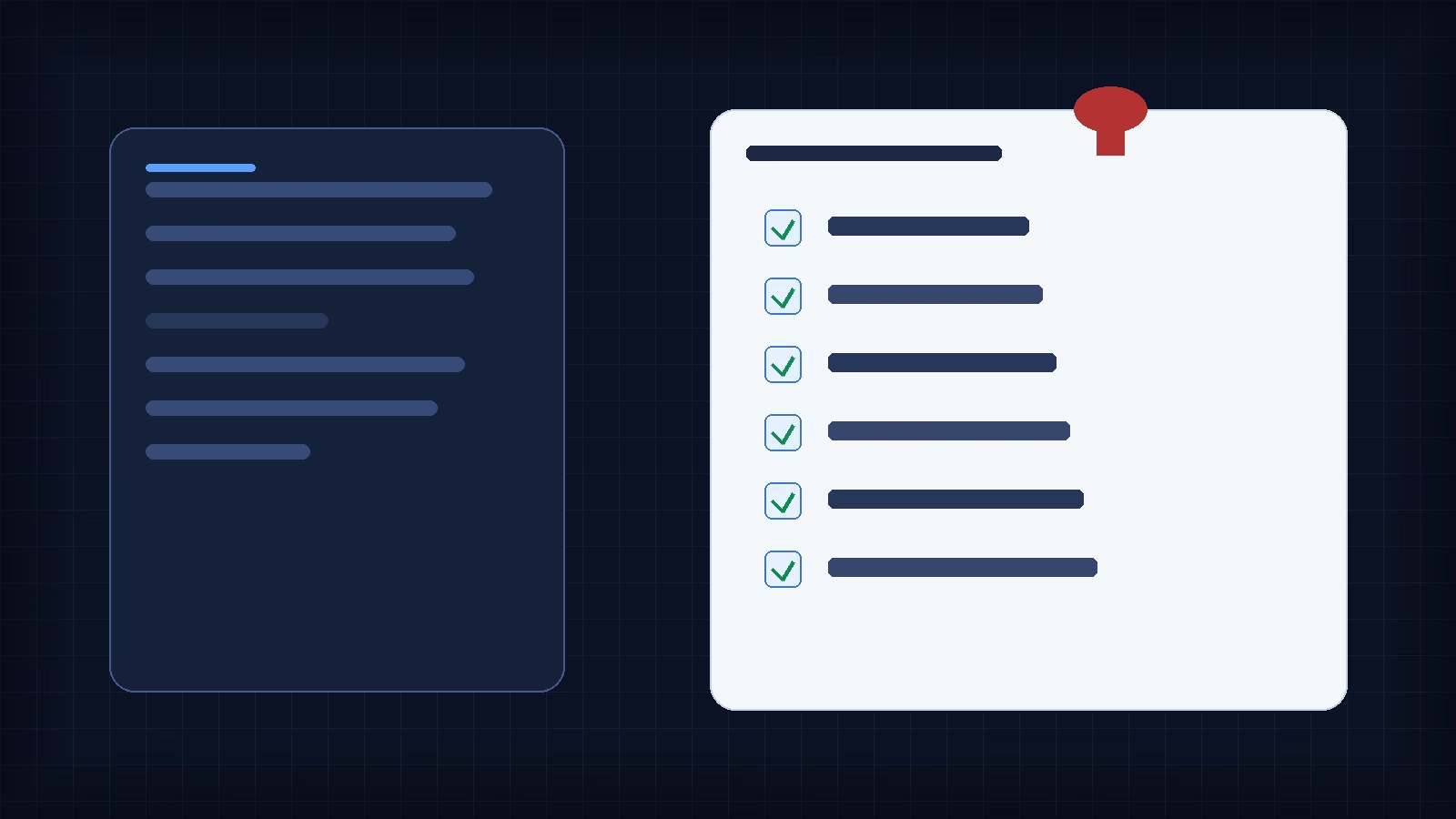
AIA research dump in a chat thread is not a report. A client cannot open your scroll history, cannot audit what you skipped, and cannot act on a paragraph that disappears when the tab closes. The unit of work is the file: a document with a stable structure someone else can review without you in the room (The Artifact Standard).
This piece is the operating checklist for that file. Not a style guide. Not a tool bake-off. What has to be in the document before you send it.
The question the report answers
Put the brief at the top. One or two sentences: what decision this report is for, whose question it answers, and what is out of scope.
If the question is fuzzy, the findings will be fuzzy. Write the question as the client would recognize it, not as your internal prompt. “Should we enter the DACH SMB segment in Q4?” beats “market overview.” Scope cuts are part of the brief: languages, time window, competitors included, competitors ignored.
A report without a stated question is a blog post with citations.
Method: what you actually did
Clients do not need your prompt log. They need the method in plain language.
- What sources you opened (databases, filings, interviews, product docs).
- What you searched for and what you deliberately did not.
- How fresh the evidence is (as-of date).
- Whether a human reviewed the draft, or an agent assembled it and a human signed off (AI Agents vs Chatbots).
Method is how trust transfers. Without it, every finding looks like a vibe.
Findings with evidence, not vibes
Each finding should survive one hostile question: “How do you know?”
State the claim. Point to the evidence. Separate fact from inference. If two sources disagree, say so and pick a stance with a reason. Tables help when you compare options; prose helps when you explain a mechanism. Do not bury the answer three pages down.
A useful pattern:
- Claim in one sentence.
- Evidence in one or two sentences with a link or citation.
- So-what for the decision.
If a section cannot do that, it is notes, not a finding.
Sources the client can open
List sources the reader can actually click. Prefer primary material: filings, standards, peer-reviewed work, official stats, named industry reports. Secondary summaries are fine as bridges, not as the only load-bearing wall.
Dead links, paywalled PDFs you never opened, and “according to the model” are not sources. If an agent fetched pages, keep the URLs that survived review. If you could not verify a claim, it does not belong in Findings; it belongs in Limits or it comes out.
Limits: what you did not check
This is the section amateurs skip and professionals read first.
Say what you did not cover: markets, languages, time ranges, data you could not access, assumptions you made because the brief was silent. Limits are not an apology. They are the boundary of the recommendation. A client who knows the edge can still decide; a client who discovers the edge in a meeting loses trust.
Decision or next step
End with something the client can do on Monday.
- A recommendation with conditions.
- Two or three options with trade-offs.
- A single next experiment, owner, and date.
If the report cannot recommend or tee up a decision, it was research entertainment. Keep the CTA for your own product separate from the client’s decision block.
Checklist before you hit send
- [ ] Question and scope at the top, in the client’s words
- [ ] Method with as-of date and review note
- [ ] Findings: claim, evidence, so-what
- [ ] Sources: live HTTPS links the client can open
- [ ] Limits: what you did not check
- [ ] Decision or next step a stranger could act on
- [ ] The whole thing is a file with a URL or attachment — not a chat thread
If any box is empty, the report is not client-ready. Finish the file, then send.
Sources
MMARW / INTELLIGENCE
Put the same discipline to work.
This publication was formulated by MMARW. Try the workspace free for your own focused AI work.