MMARW / INTELLIGENCE / RESEARCH
How to Write a Research Brief for AI
Vague prompts produce vague research. Put the decision, scope, sources, and done-state in a file before you hit Send.AI-assisted publicationAI contributed to the research, drafting, or imagery. MMARW retains editorial responsibility for the published page.
3 min readPublished By MMARW
 AI
AIMost AI research failures start as a chat dump. Someone pastes: “Look into the lithium market, trends, maybe competitors, keep it professional.” That is not a brief. It is a conversation starter. Vague inputs push the model toward the most generic answer, and you get a summary of summaries with no edge and no audit trail.
If you want research that survives client scrutiny, stop prompting and start briefing. The brief is a file — the same unit of work as the report that comes out the other end (The Artifact Standard).
The brief as a file
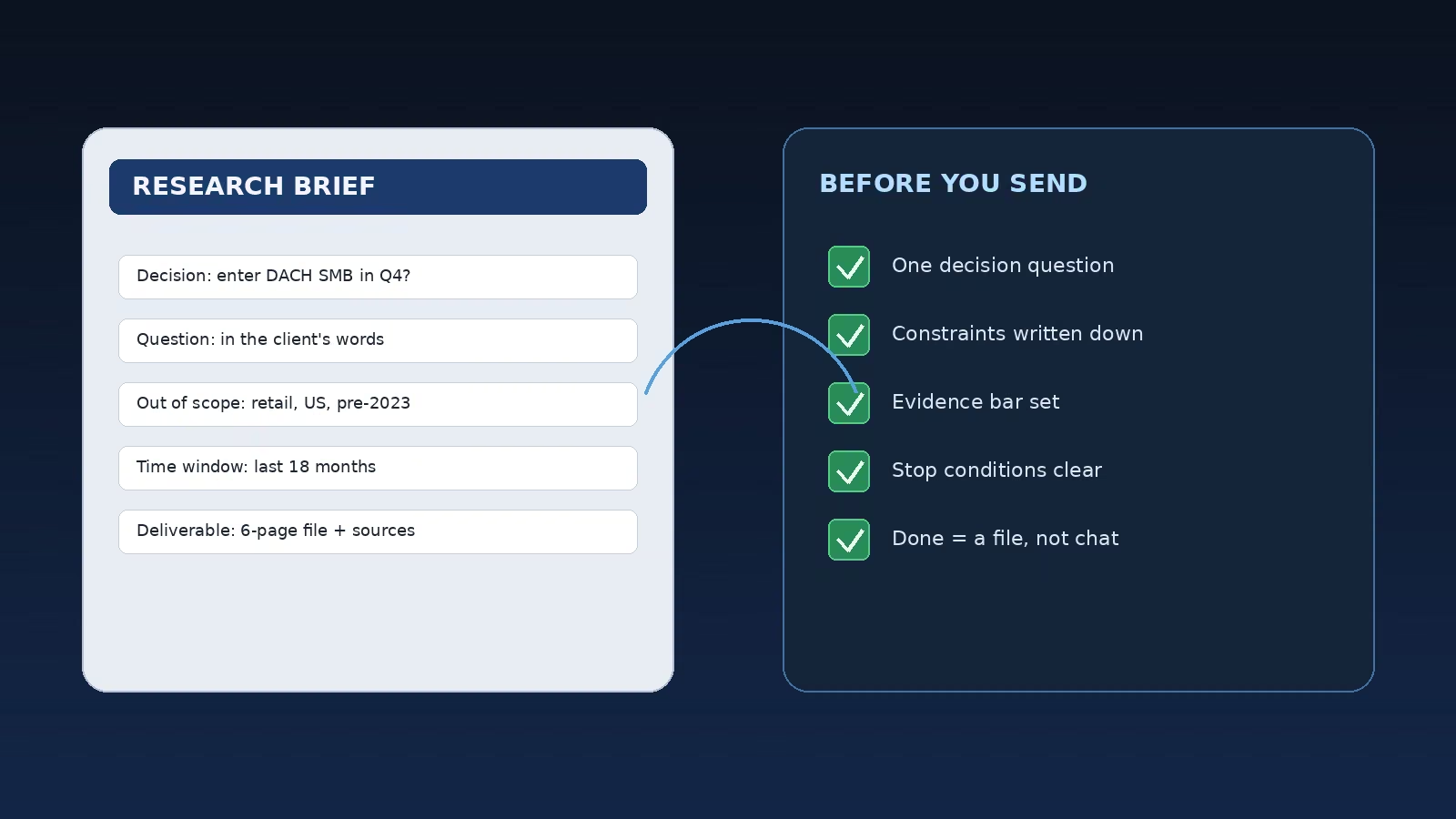
Treat the model like a research associate, not a chatbot. Upload or paste one immutable set of instructions. A usable brief contains:
- The decision: What decision this research supports (for example, whether to enter the Southeast Asian EV charging market in Q4).
- The client question: In the stakeholder’s words, not your internal prompt slang.
- Out-of-scope cuts: Markets, languages, competitors, and angles you will not cover.
- Time window: As-of date and lookback (for example, data from 2022 to present only).
- Source guardrails: Allowed types (filings, official stats, named industry reports) and forbidden ones (unverified aggregators, speculative blogs).
- Deliverable format: What “done” looks like as a file (for example, a 3-page memo plus a sources appendix).
A brief without those fields is still a chat message with nicer formatting. The model will invent the missing constraints, and you will not notice until a client asks how you know.
Operating rules
Bake these into the brief so the run cannot quietly invent them later:
- One decision question. One core question per run. Complexity is the enemy of accuracy.
- Constraints. Length, structure, max sources per claim, languages.
- Success criteria. What “good” looks like (for example, three contrasting viewpoints on volatility, each with a primary source).
- Evidence bar. Primary only, or secondary consensus allowed — say which.
- Stop conditions. When to stop searching (for example, top five players, then stop).
- Definition of done. A completed file that meets the brief — not another reply in the thread.
Method and limits belong in the brief before the model starts, not as an apology after it finishes. That is how trust transfers into the report (The Client-Ready Research Report).
Common failure modes
- Expanding scope mid-run. Adding questions in follow-up chat breaks the original brief and produces fragmented, contradictory output. Re-brief; do not re-chat.
- Missing the as-of date. Stale data gets dressed up as current.
- No review or sign-off. First-pass model output is not client-ready without a human check on source integrity.
- Confidence as evidence. Tone is not a citation. A model can be confidently wrong. Demand openable links, or the claim does not belong in Findings.
Checklist before you hit Send
- [ ] One clear decision question
- [ ] Out of scope written down
- [ ] As-of date and time window set
- [ ] Forbidden sources named
- [ ] Deliverable defined as a file structure
- [ ] Evidence bar stated
- [ ] Stop conditions clear
If a box is empty, the run will fill it with vibes. Finish the brief, then send.
Sources
MMARW / INTELLIGENCE
Put the same discipline to work.
This publication was formulated by MMARW. Try the workspace free for your own focused AI work.